
Saqqara, Memphis & Dahshur Travel Guide
Step Pyramid, Ancient Memphis, Bent Pyramid, Red Pyramid and Private Day Trip Tips from Cairo
Saqqara, Memphis and Dahshur form one of the most important archaeological
routes near Cairo, offering travellers a deeper look at the development of
ancient Egyptian architecture, royal burial traditions and the evolution of
pyramid building.
This Saqqara, Memphis and Dahshur travel guide explains what to see at each
site, how to combine them in one day and why these destinations are an ideal
extension to a visit to the Giza Pyramids.
Why Visit Saqqara, Memphis and Dahshur?
While the Giza Pyramids are Egypt’s most famous monuments, the story of pyramid
building began earlier and developed over several generations.
Saqqara, Memphis and Dahshur allow travellers to follow that development across
different archaeological sites south of Cairo.
Why this route matters:
you can see the development from early monumental stone architecture to the
true pyramids that eventually led to the construction of the Great Pyramid at
Giza.
Saqqara
Saqqara is one of Egypt’s largest and most important archaeological areas.
It served as a major necropolis for ancient Memphis and contains monuments
from many different periods of Egyptian history.
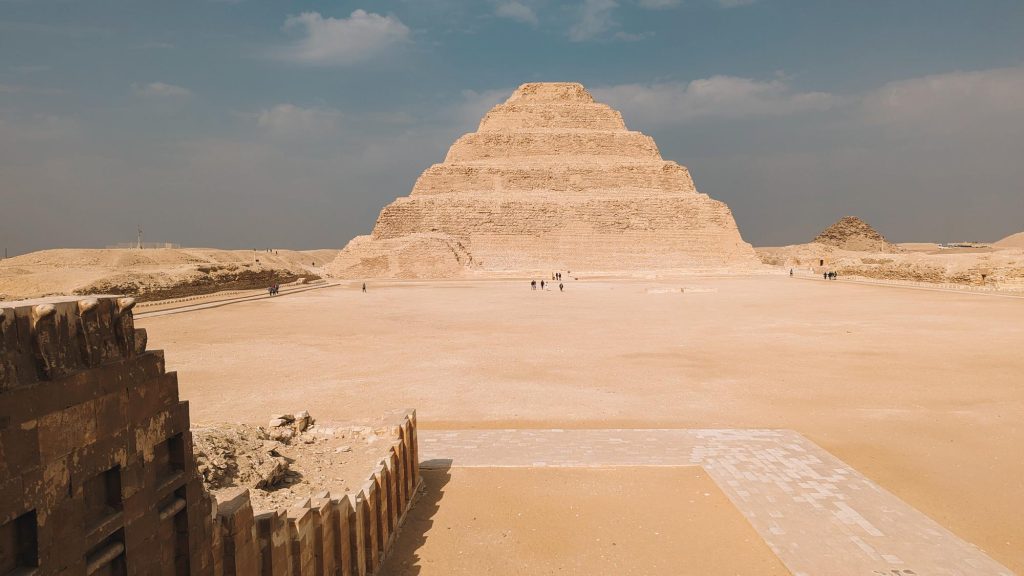
The site is best known for the Step Pyramid of Djoser, but Saqqara contains
far more than one monument.
Step Pyramid of Djoser
The Step Pyramid is one of the most important landmarks in the history of
ancient Egyptian architecture.
Built for King Djoser during the Third Dynasty, it represents a major step
in the development of monumental stone construction in Egypt.
The pyramid forms part of a larger ceremonial complex that includes courtyards,
walls and architectural elements designed to reproduce structures that had
previously been built in less permanent materials.
The Djoser Complex
The wider complex surrounding the Step Pyramid helps visitors understand that
Egyptian pyramids were not isolated structures.
They formed part of larger royal funerary landscapes that included temples,
courtyards and ceremonial buildings.
Tombs and Mastabas at Saqqara
Saqqara also contains numerous mastaba tombs decorated with scenes showing
daily life, agriculture, craft production and religious practices.
For travellers interested in Egyptology, these tombs can be just as valuable
as the pyramids because they provide detailed evidence about life in ancient
Egypt.
Memphis
Memphis was one of the great cities of ancient Egypt and served as an important
administrative and religious centre for many centuries.
Although much of the ancient city has disappeared beneath later settlement and
agricultural land, surviving monuments and sculptures still provide a link to
its historical importance.
What Can You See in Memphis?
Visitors can see archaeological remains and monumental sculpture associated
with the ancient city and its temples.
The site works particularly well as a shorter stop between Saqqara and Dahshur.
Dahshur
Dahshur is one of the most important places in Egypt for understanding the
development of the true pyramid.
The area contains several pyramids, but the two most famous are the Bent
Pyramid and the Red Pyramid, both associated with King Sneferu.
The Bent Pyramid
The Bent Pyramid is immediately recognisable because the angle of its sides
changes partway up the structure.
This unusual form reflects an important experimental stage in the development
of pyramid architecture.
The Red Pyramid
The Red Pyramid is one of the earliest successful true pyramids and represents
a major advance in pyramid construction.
Its smooth-sided form helped establish the architectural model that would later
reach its most famous expression at Giza.
What Is the Best Order to Visit the Sites?
A common private sightseeing route from Cairo is:
Recommended route
Cairo or Giza → Saqqara → Memphis → Dahshur → Return to Cairo
The order can be adjusted depending on your hotel location, current opening
times and the areas you most want to explore.
Can You Visit Saqqara, Memphis and Dahshur in One Day?
Yes. The three sites are geographically connected and can be combined into
one full archaeological sightseeing day.
The key is to start early and avoid adding too many unrelated Cairo
attractions to the same programme.
Good planning:
Keep this day focused on the ancient sites south of Cairo. Islamic Cairo,
Old Cairo and central city attractions fit better into separate sightseeing days.
How Much Time Do You Need?
Saqqara
Allow the largest portion of the day here, especially if you want to visit
additional tombs and monuments beyond the Step Pyramid.
Memphis
Usually a shorter stop than Saqqara or Dahshur, depending on your interests.
Dahshur
Allow enough time to see the Bent Pyramid, Red Pyramid and surrounding desert
landscape without rushing.
Driving Time
Allow additional time for road travel between your hotel and the archaeological
sites.
Saqqara or Giza?
Saqqara and Giza offer very different experiences and should not be viewed as
substitutes.
Giza contains the most famous pyramids and the Great Sphinx, while Saqqara
offers a broader archaeological landscape and an earlier stage in the
development of pyramid architecture.
Travellers with enough time should ideally visit both.
Can You Combine Saqqara with the Giza Pyramids?
Yes. Giza and Saqqara can be combined, particularly for travellers with limited
time and a strong interest in ancient Egypt.
However, adding Memphis and Dahshur as well creates a very long sightseeing day.
Alternative archaeology route
Giza Pyramids → Saqqara
For a more relaxed itinerary, keep Giza and GEM together on one day, then visit
Saqqara, Memphis and Dahshur on another.
Can You Combine Saqqara with GEM?
It is possible to combine Saqqara with the Grand Egyptian Museum, but this
works best for travellers who are comfortable with a longer archaeology-focused
day.
If you want time to explore the museum properly, consider keeping GEM with the
Giza Pyramids and dedicating another day to the sites south of Cairo.
Why Dahshur Is Worth Visiting
Dahshur is sometimes overlooked by first-time visitors, but it is one of the
best places to understand how pyramid construction developed before Giza.
The Bent Pyramid and Red Pyramid show two important stages in architectural
experimentation and also provide a quieter desert experience than the Giza
Plateau.
Private Day Trip from Cairo
Private transport is one of the easiest ways to combine Saqqara, Memphis and
Dahshur because the sites are spread across different areas south of the city.
Taxi2Attractions can arrange a private vehicle from Cairo or Giza hotels,
allowing travellers to move between the archaeological sites according to
their planned itinerary.
Where Can You Start From?
Downtown Cairo
Private pickup can be arranged from central Cairo hotels before travelling
south towards the archaeological region.
Giza Hotels
A convenient starting point for travellers staying near the Pyramids or Grand
Egyptian Museum.
Zamalek
Private vehicles can collect travellers from Nile-side hotels before beginning
the archaeological day trip.
New Cairo
Travellers starting in eastern Cairo should allow additional driving time to
reach Saqqara and Dahshur.
Choosing the Right Vehicle
Standard Sedan
Suitable for one to three passengers travelling on a private sightseeing day.
SUV or MPV
Provides additional passenger space and comfort during longer road journeys.
Comfort Minivan
Recommended for families, small groups or travellers who prefer extra space
during a full sightseeing day.
Group Vehicles
Mini coaches and larger vehicles can be arranged for organised private groups.
Should You Hire an Egyptologist Guide?
A knowledgeable Egyptologist guide can add considerable value to a visit to
Saqqara, Memphis and Dahshur because the historical connections between the
sites are not always obvious without explanation.
A guide can help explain the evolution of pyramid architecture, royal funerary
beliefs and the role of ancient Memphis within Egyptian history.
What to Bring
- Comfortable walking shoes
- Water
- Sun protection
- Hat or sunglasses
- Comfortable clothing suitable for outdoor archaeological sites
- Camera or phone
- Cash or payment method for any on-site extras where required
Best Time to Visit
The archaeological sites can be visited throughout the year, but outdoor
conditions are generally more comfortable during cooler months.
During hotter periods, starting early is particularly useful because much of
the sightseeing takes place outdoors.
Practical Travel Tips
- Start early to maximise sightseeing time.
- Check current opening hours before departure.
- Allow more time at Saqqara than at Memphis.
- Do not underestimate walking distances at archaeological sites.
- Bring water and sun protection.
- Keep the day focused on nearby archaeological attractions.
- Consider an Egyptologist guide if ancient Egyptian history is a major interest.
- Choose a comfortable vehicle for the full day.
Frequently Asked Questions
Can I visit Saqqara, Memphis and Dahshur in one day?
Yes. The three archaeological areas can be combined into one private full-day
trip from Cairo or Giza.
What is Saqqara famous for?
Saqqara is best known for the Step Pyramid of Djoser, but it also contains
numerous pyramids, tombs and monuments from different periods.
What is special about the Bent Pyramid?
The Bent Pyramid has a distinctive change in angle and represents an important
experimental stage in the development of true pyramid construction.
Why is the Red Pyramid important?
The Red Pyramid is one of the earliest successful true pyramids and represents
a major step towards the later pyramid architecture seen at Giza.
Can I combine Saqqara and the Giza Pyramids?
Yes. Giza and Saqqara can be combined, although travellers should allow enough
time to explore both archaeological areas properly.
Can I hire a private vehicle from Cairo?
Yes. Private transport can be arranged from Cairo or Giza hotels for a
sightseeing route through Saqqara, Memphis and Dahshur.
Explore Egypt Beyond the Giza Pyramids
Travel from Cairo to Saqqara, ancient Memphis and Dahshur with private
transport planned around your sightseeing pace, passenger numbers and
preferred archaeological sites.